
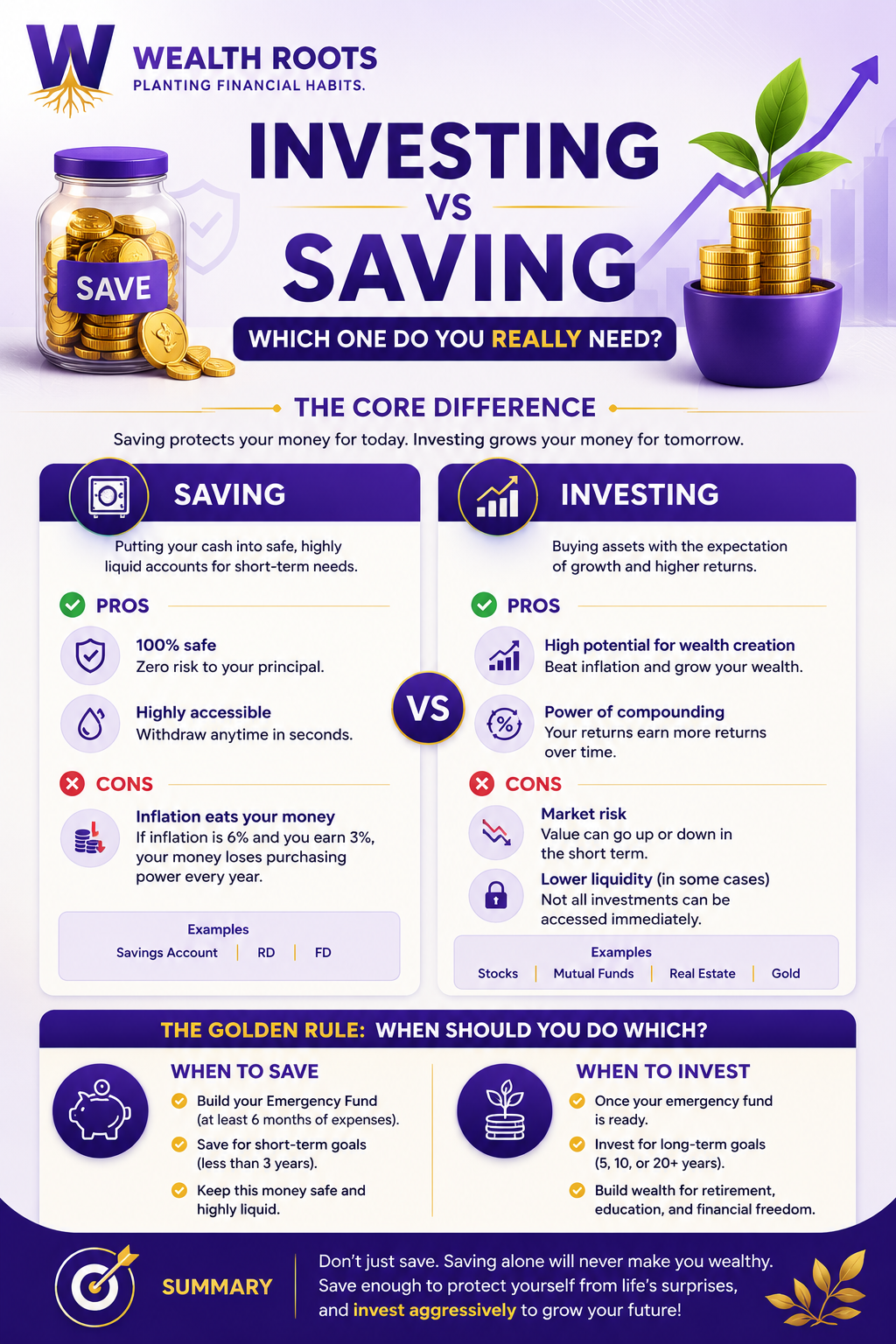
Investing vs Saving - Which One Do You Really Need?
The Core Difference Between Saving and Investing
While people often use the terms interchangeably in everyday conversation, saving and investing serve two fundamentally different purposes in your financial journey. Saving is about protecting your money and keeping it safe for short-term needs. Investing, on the other hand, is about putting your money to work so it can grow and generate wealth for your future.
What is Saving?
Saving means putting your cash into safe, highly liquid accounts. This includes keeping cash in a savings bank account, recurring deposits (RD), or fixed deposits (FD).
The Pros: Your money is 100% safe. There is virtually zero risk of losing your principal amount. It is also highly accessible (liquid), meaning you can withdraw it at an ATM or via net banking in seconds.
The Cons: The biggest enemy of saving is Inflation. Inflation is the rate at which the cost of living increases. If inflation is at 6%, and your savings account gives you 3% interest, your money is actually losing its purchasing power every single year. You are essentially getting poorer by just saving.
What is Investing?
Investing means buying assets (like stocks, real estate, mutual funds, or gold) with the expectation that they will grow in value over time and generate a return.
The Pros: High potential for wealth creation. Investing is the only reliable way to beat inflation over the long term. Through the power of compounding, your money earns returns, and then those returns earn more returns.
The Cons: It involves market risk. The value of your investments can go up or down in the short term. It also lacks immediate liquidity in some cases (like real estate or lock-in mutual funds).
The Golden Rule: When Should You Do Which?
When to Save: You must save for your Emergency Fund. Everyone should have at least 6 months of their living expenses saved in a highly liquid savings account or FD. You should also save for short-term goals that are less than 3 years away (like buying a car, planning a wedding, or an upcoming vacation). You cannot afford to risk this money in the stock market.
When to Invest: Once your emergency fund is full, you must start investing. Invest for long-term goals that are 5, 10, or 20 years away. This includes building a retirement corpus, planning for your children’s higher education, or simply achieving financial independence.
Summary
Don't just save. Saving alone will never make you wealthy. Save enough to protect yourself from life's surprises, and invest aggressively to grow your future!